

We took a flight from Santiago to Punta Arenas, which is the capital city of the region Maggellan in Chilean Patagonia and lies directly on the shore of the Maggellan strait. From there we got our rental car (a huge pickup truck) and made our way north to the famous national park Torres del Paine, which is the main attraction in Patagonia. Actually we had planned to stay either in the national park or near its border. But as Torres del Paine is one of the most prominent national parks in South America, we were not the only ones with that idea. It turned out that there were as good as no affordable accommodations, and the few affordable ones were already booked out. Therefore we decided to stay in Puerto Natales, which is a relatively pretty town on the coast and roughly two hours away from the park. From there we ventured out four days in a row by car over mostly unpaved roads to discover the secrets of the towers.
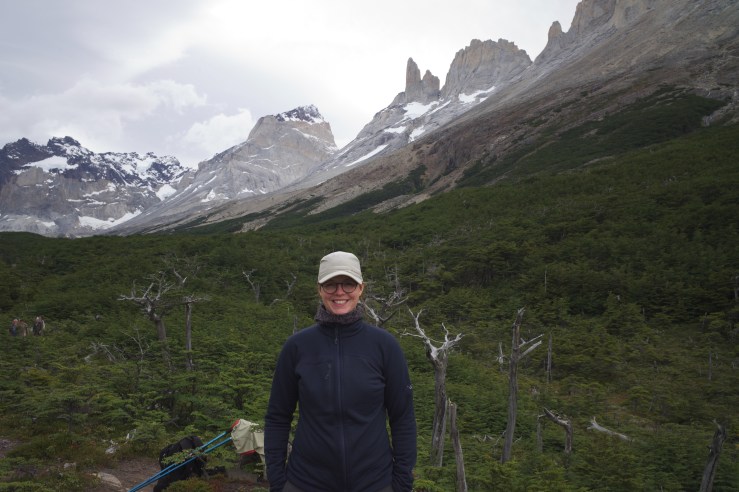
Me standing in front of some torres in the Valle Francés
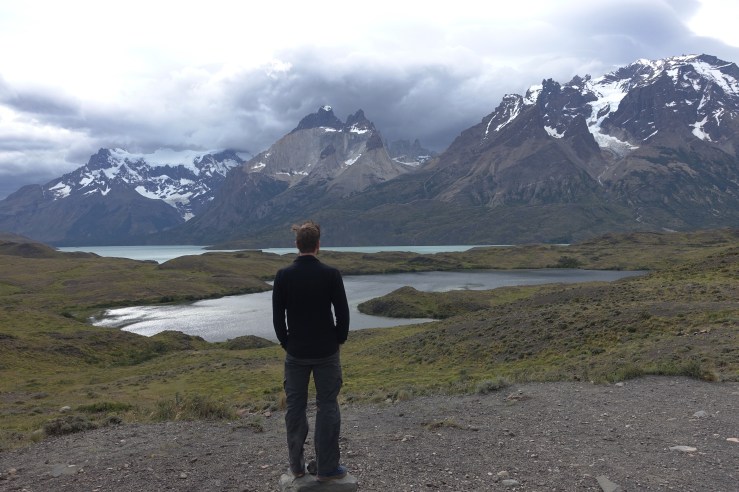
Yves marvels at the Torres del Paine

Our car was the smallest one they had available. In the back is our little house just outside Puerto Natales, where we stayed for three nights. It was a little bit cold.
The park is famous for its rough landscape, its beautiful glacier lakes, its ever looming towers (the Torres), steep cliffs and vast glaciers. Adventure hikers are able to do a four- or eight-day hike, known as W- and O- trek, respectively. Either you go all the way around the mountain group of the torres (O-trek) or hike just on one side into the different valleys, which gives the hike a W shape on the map. To do one of these options you need to camp on the sites along the way, which are booked out in high season months in advance. Being too late and not very keen on camping, we agreed on doing only day hikes and were happy that three out of the four days of the W-trek were also accessible this way.
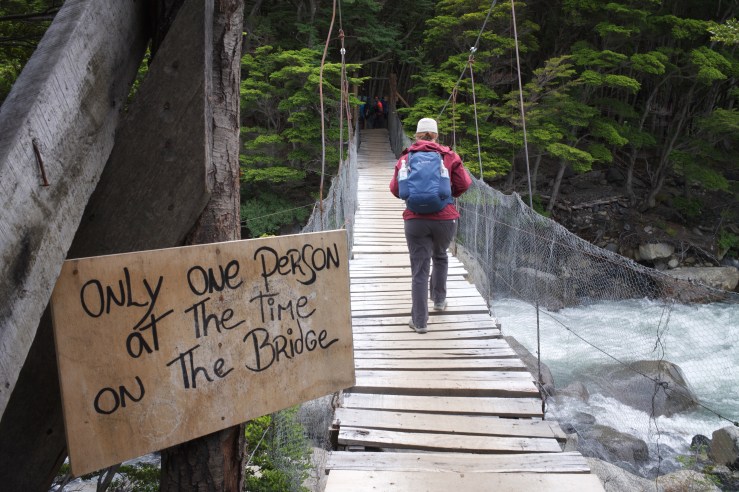
On my way into the Valle Francés
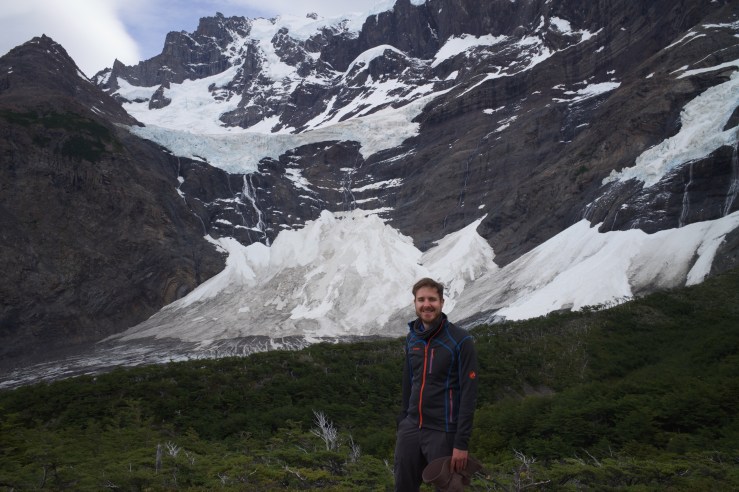
Yves standing in front of the glacier at Cerro Paine Grande
On average these hikes took around seven to eight hours where we had to cover long distances. We went through beautiful small woods with different shades of green, over boulder fields, paths that became small rivers, areas with burned trees, which gave the place a mistical look, and huge fields of grass, where only the mountains gave us a sense of horizon. Of course the hikes weren`t always very easy. Being tired from the days before and having to wake up early together with the really strong wind that nearly blowed us away especially I struggeled sometimes. But we were awarded for our struggles with amazing views over high mountain lakes surrounded by snowcapped peaks, and glaciers that cover hundreds of square kilometers. We also saw for the first time in our lifes pale blue icebergs drifting on the glacier lakes. Of course the park is inhabitated by a vast amount of animals: Rabbits were everywhere, guanacos were strolling alongside the hills and condors were gliding gracefully through the air.

Watching the floating icebergs that slowly melt away

Hiking on the W through the dead forest
We really enjoyed this rough but amazingly beautiful region and could have stayed for longer. As we also wanted to see Tierre del Fuego, we had to move again back to Punta Arenas, and from there we were taking a ferry in the direction of the end of the world. 😉


Eisberge sahen wir auch in island! Eindrücklich!
Danke für den Bericht
LikeLiked by 1 person