

After three months on the South American continent our first stop in “Polynesia” was the Easter Island (also known as Rapa Nui), although it politically belongs to Chile. The Easter Island is a relatively small island and very isolated in the middle of the pacific ocean. Apparently it is the island with the furthermost distance to mainland. It has three volcanones, only little woods and lot of grassland. As a French settler needed land for his sheeps back in the 1870s, all natives were forced to live in one town. There is still only one village on the island – everybody lives in Hanga Roa. The rest of the island is either farmland or the national park.
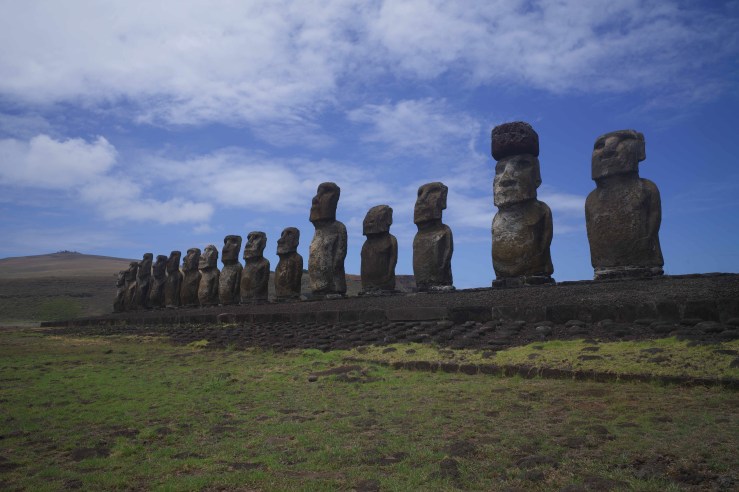
The famous 15 moai at Ahu Tongariki
The day after our arrival we headed out to hike up the highest peak on Rapa Nui, which lies in the national park. Right at the beginning of the trail we saw our first group of moai. Moai are the main attraction on Rapa Nui and what the island is famous for. Moai are kolossal statues made out of stone which usually were set up in groups near the coasts and served as ceremonial cites. How the islanders were able to transport these huge and heavy stone statues to the different locations all over the island is still a mistery today and subject of animated discussions. All of the moai were toppled during the years and especially during the island’s civil wars, but many have been erected and restored. Today we can see these impressive and sensational statues watching over the island and its inhabitants again.

Moai watching the entrance of the hiking trail.
The hike to the highest point wasn’t very difficult, but gave us a very nice and nearly 360 degrees view of Rapa Nui. From there we took the long trek back to the city and visited ruins of ancient villages (which were hardly recognisable) and some impressive vulcanic caves along the way.
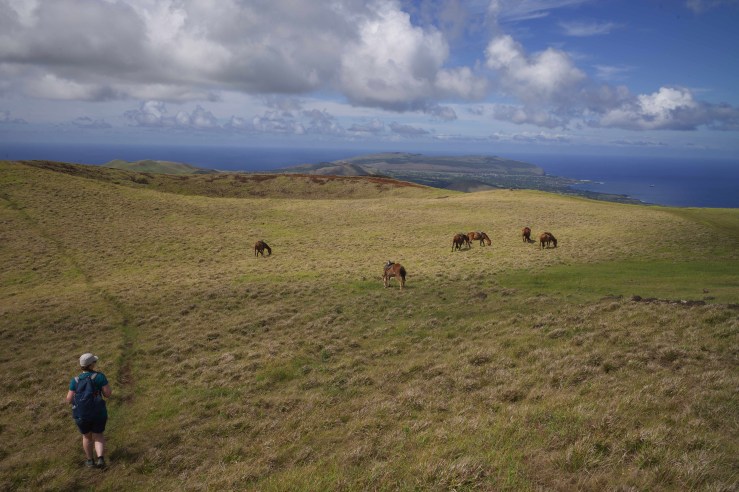
I am on the way back to the village (Hanga Roa is in the distance), enjoying the view and the horses

This picture shows a head of a moai on the floor of the ancient village. We learned that there was no standing moai when the Europeans arrived. All moai were lying around on the ground like this one.
On the next day we hired a car to go up north into the national park. This car was by far the oldest and shabbiest car we ever had as rental car. But this turned out to be positive as they didn’t offer any insurance and an additional scratch would’t have made any difference. We got up very early to arrive at Ahu Tongariki before sunrise. Tongariki is the largest ahu (ceremonial place) on the island and has 15 moai standing next to each other. This is impressive in itself, but the main attraction is watching the sun rising directly behind these moai. Together with a large group of other people we welcomed the day and marvled at the sight.
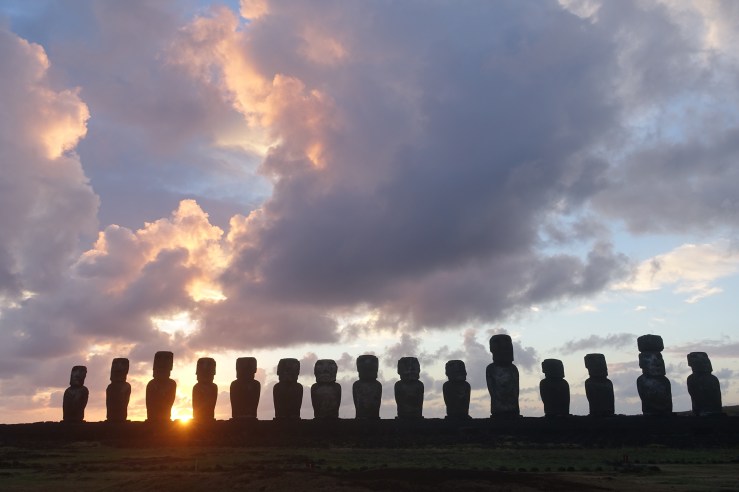
The sun rises above the moai on Ahu Tongariko.
We spent the rest of the day driving to different ahus and along the coast. The most impressive site next to Ahu Tongariki was Rano Raraku, which is a vulcanic crater. This site is called “The nursery” as all the moai on the island were carved out of its tuff stone walls. Around 397 moai are still located around the vulcano.
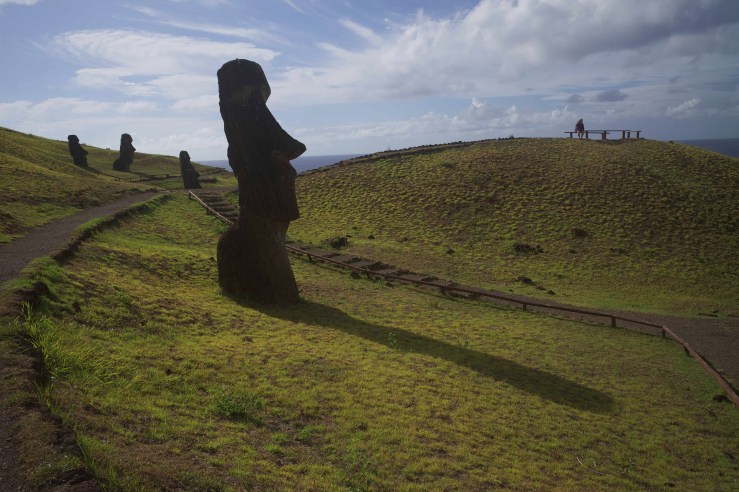
I am watching the moai in the nursery.
In the evening we visited a performance of the native dance. This was spectacular – a mixture of war and fertility dance. Let’s say it was quite direct, especially in combination with the music and the singing.

The “Ballet Kari Kari” is a traditional dance group that celebrates the polynesian heritage of Rapa Nui.
On our last day on the island, we hiked to Orongo. Orongo is located at the south west tip directly on the cliffs (300 meters above the sea) and above the lake in the crater of the vulcan Rano Kao. This site was an important cultic site and has a very arcane feeling to it. We spent some time strolling trough this old „village“ with its small housings build out of stone. In the late afternoon we returned to our accomondation and got ready to catch our flight in the evening to the paradise French Polynesia.
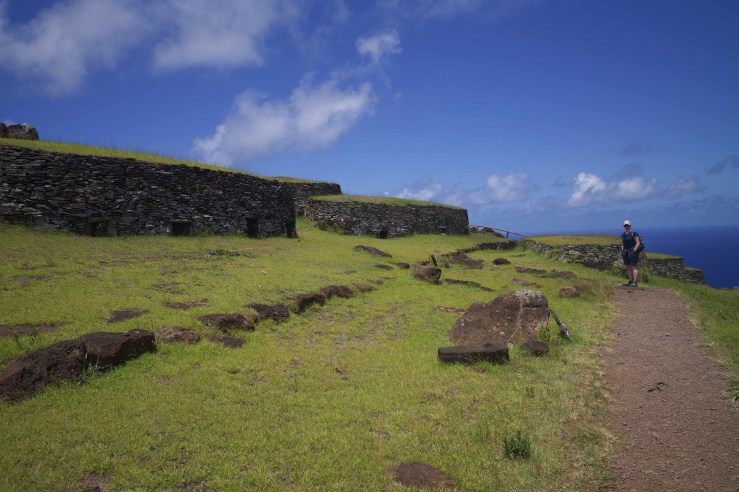
These are the buildings in Orongo, one of the most important cultic sites on the island.
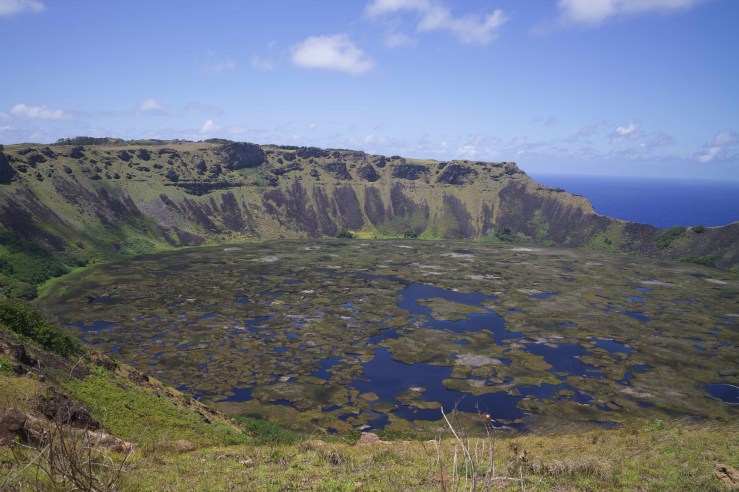
The crater of vulcan Rano Kao is 200 meters deep

 Erst einmal weg...