

When we arrived in Rio Gallegos after a daylong drive we were not really over the mood. It was a city of its own. Not because it is beautiful. Our hotel reflected the atmosphere of the city and we were happy to leave quickly after checking in to find a restaurant. We left the first restaurant (it was featured in the Lonely Planet guide for having the nicest waiters in town) right away because of a crackling TV right next to the table, a shabby menu and a not-so-nice waiter. Luckily we found another restaurant, however, it was still closed as many restaurants open at 8.30 pm – no idea why.
On the next morning we left the town to drive to El Chaltén, a famous Argentine village located in the middle of impressive mountains. We stayed on an old Estancia in the steppe outside the city and enjoyed the calm environment. Horses, cows, kittens and a rabbit were always around the house, grazing or playing.
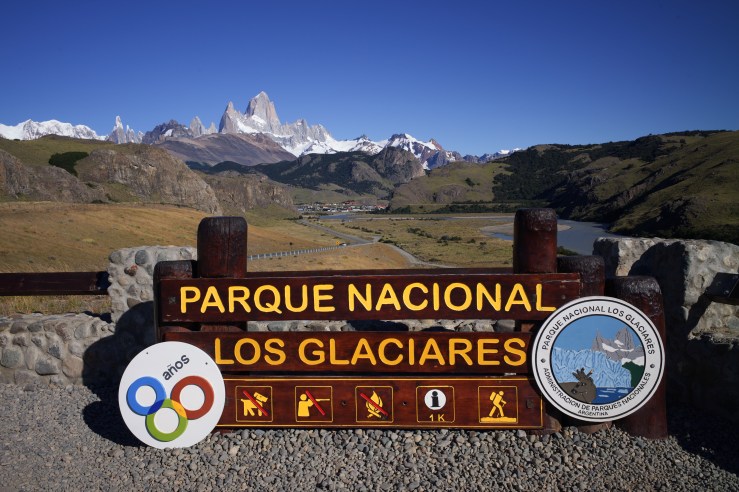
The entrance to the Northern part of the national park Los Glaciares. El Chaltén is in the back.
During our two days we hiked the two main hikes, both about 20km long: On the first day we went to hike to the Cerro Fitz Roy, one of the largest peaks in the region. It is a majestic mountain surrounded by other peaks that looked like the towers from Torres del Paine.
The hike is very popular and there were a lot of people, but the landscape was breathtakingly beautiful. We started to hike through the Patagonian forest and then came to a wonderful blue lake which reflected the nearby mountains. We then crossed a plateau where meandering rivers flew through a landscape full of green grass. The final kilometer was very steep and took an hour, also because we got lost in a 40+ group of Chinese tourists. The path ended at a lake right beneath the glacier and the view was a great reward for the steep climb at the end. After lunch we took some pictures before we returned to the village. It was definitely one of the most beautiful hikes we ever made and we can recommend it to everyone who goes to Patagonia.

The beautiful scenery on the hike to Cerro Fitz Roy
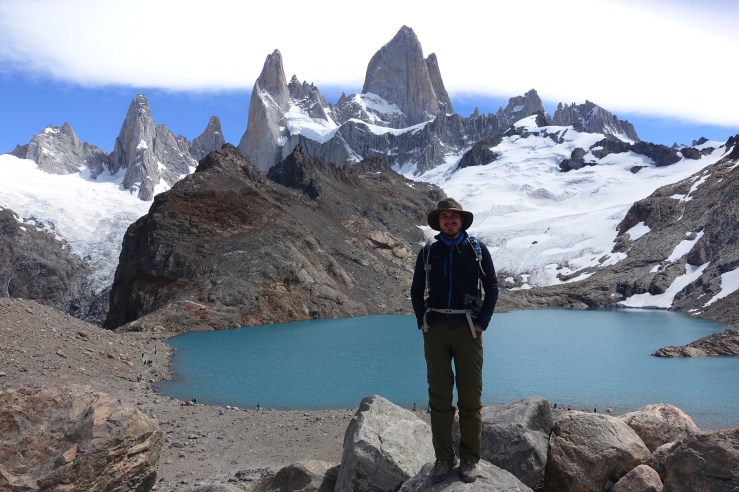
Me in front of the Cerro Fitz Roy, the glacier and the lake. This was the final point of the hike before we returned back to El Chaltén.
On the second day we went to see the Cerro Torre, a peak that is usually covered in clouds. This was also true for our day: We were only able to see the peak for about a minute. However, the hike was also nice and the lagoon with floating ice was a beautiful sight. We again enjoyed the great landscape, which was similar to our first hike, and were happy to spot a condor in the morning.
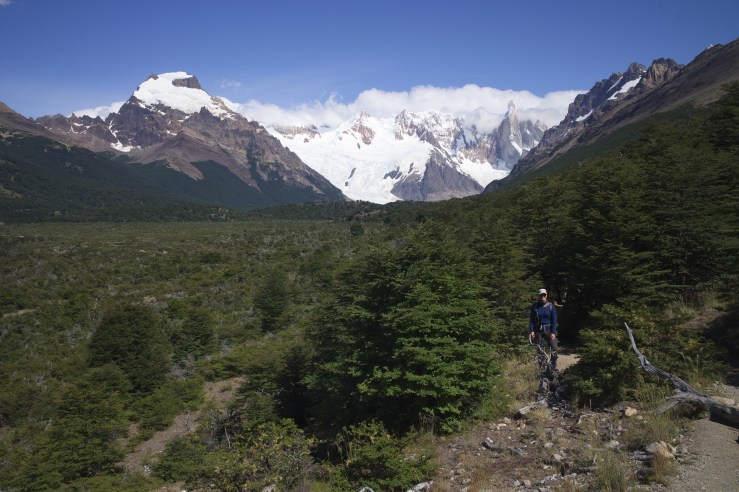
This was the only minute where we saw the Cerro Torre. The peak is the high one on the right side in the back, close to where Christine stands.
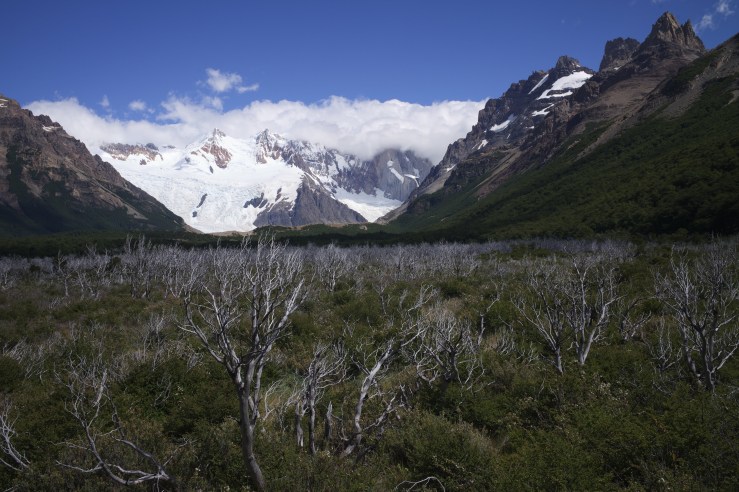
On the way to the Cerro Torre

Waiting for the clouds to disappear – we were not lucky.
El Chaltén is the entrance to the Northern side of the Parque Nacional Los Glaciares and we were also eager to see the South. Therefore, we left the quiet Estancia and drove to El Calafate, a much larger village located at Lago Argentino. This part of the national park is famous for its glaciers. To learn more we went to the Glaciarium, a great museum who tells a lot about glaciers in general and the history of how the Argentine glaciers were explored. The displays were very comprehensive and after the visit we were ready to experience these wonders of nature.
The next day we went to the glacier Pepito Moreno, named after a famous scientist and explorer who mapped a lot of Argentine Patagonia but never reached the glacier which is named after him. This glacier is one of a few in the world which are not decreasing but in a steady state. It is also very popular because visitors are able to get very close to it. We stayed for many hours, walking on footpaths on the hill across from the glacier and were impressed by the wall of ice, which is 50-70 meters high. Falling icerocks are the spectacle here and people like us spend hours sitting and waiting to see gigantic ice rocks cracking from the glacier and falling into the lake. The noise and the splash is unique and well worth the wait.


Here you can see a mid-sized tourist boat in front of the ice wall. It shows how large the glacier is.
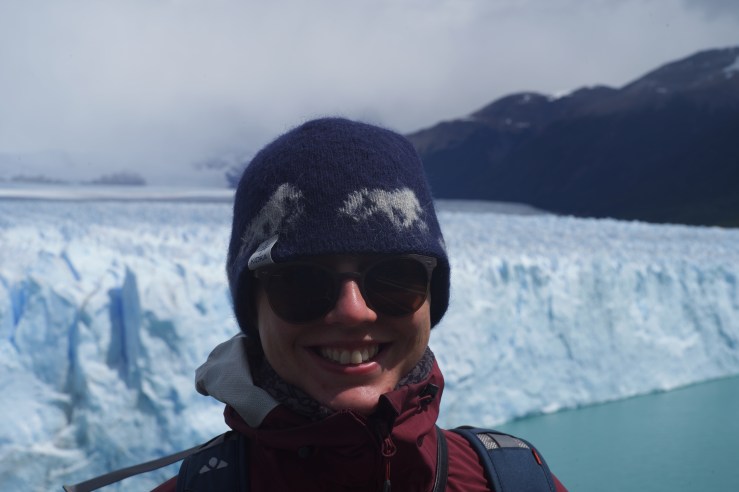

I took hundreds of pictures.
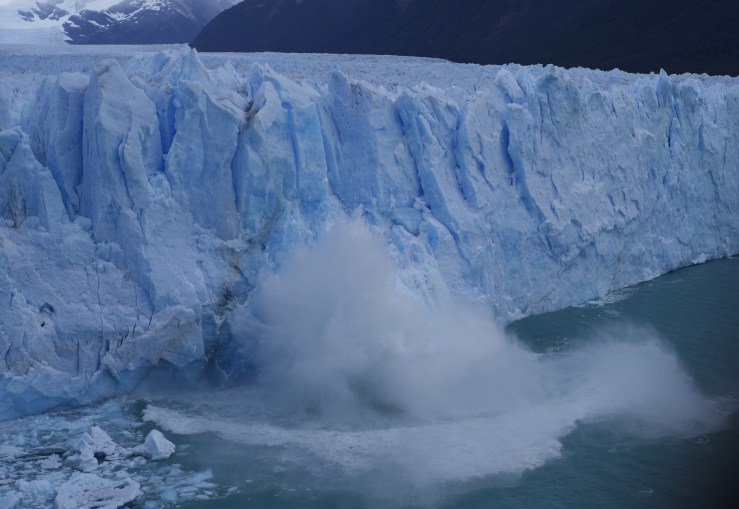
The spectacle – falling ice rocks

Here you can see the sheer size of the glacier. It was enormous.
Unfortunately our time in Patagonia was over and we eventually left Argentina for Punta Arenas, where we flew back to Santiago. Next stop: Rapa Nui – Easter Island.

 Erst einmal weg...