

We left Torres del Paine and rolled South over the long roads of Patagonia. The view did not change a lot as there is not much in between the villages, only endless grass fields, endless fences, bushes and rarely cows, sheep or – if we are lucky – lagunas with flamingos. Sometimes the clouds form a fascinating image, but the road trips can be very long if you don‘t have good conversations or enthusiastic music.
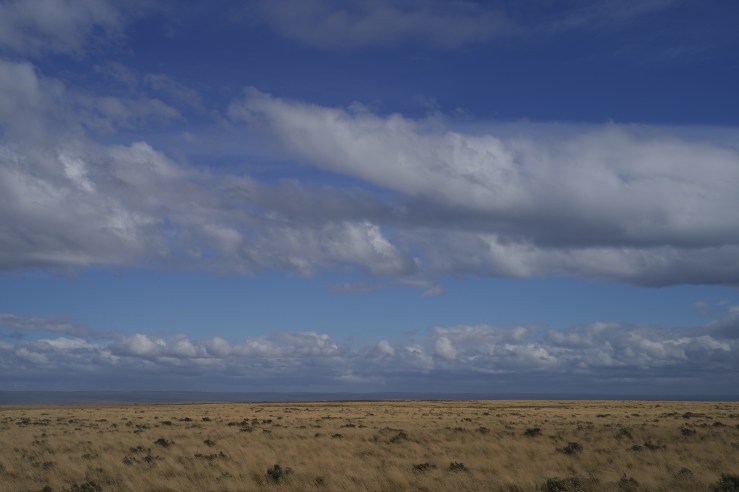
The Patagonian steppe and the endless sky
Back in Punta Arenas we crossed the Magellan strait on a ferry to Tierra del Fuego (in German: Feuerland). The trip took about two hours and we looked out for penguins, dolphins and whales, which are common there, but we saw nothing. Unfortunately the ferry was rocking stronger than we thought and Christine was very happy when we left the boat. We arrived in Porvenir, which is a nice little coastal village that has not more to offer than a handful of lodges, a very few restaurants and a gas station. We quickly left the village after checking in into our small and cold room and drove to the only place on the continent where king pengiuns nest. It was a special treat to see these majestic penguins, how they protected their eggs (it was nesting time), how they walked and how they went to the sea and dove into the waves.

The king penguins in the Bahia Inútile. The bay was called “useless bay” because the waters are too shallow for boats to come in. Therefore, they did not build a harbour, which they initially planned to do.
On the next day we left for Ushaia, the Southernmost larger city on this planet and also called „The end of the world“ – El Fin del Mundo. On that day we also crossed the border and were in Argentina for the first time. New country, new currency, new dialect and another president that hangs on the walls of the border offices.
Ushuaia is spread over a large bay, is surrounded by mountains and has everything a city needs – including a street full of car sale stores and a casino. The harbour was filled with cargo ships and cruise liners, who leave here for their very expensive but probably also unforgettable Antarctica trips.
The next morning we went to the Tierra del Fuego National Park, which is 12 km outside the city. Because of the cold climate and because Tierra del Fuego is not connected to the rest of the continent, there are only four kinds of trees in this park: the Guindo, the Lenga, the Ñire and the Canelo (I photographed the infomap and had to put it down into this blog). The landscape was full of dreamy forests, flower fields, low running rivers and fjords. It was similar to what I saw in Canada.
Here are some impressions from the Tierra del Fuego National Park:
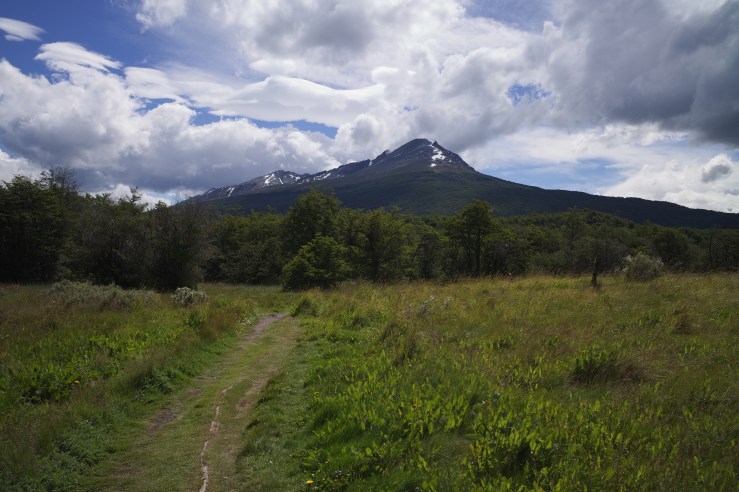
One of the peaks in the park
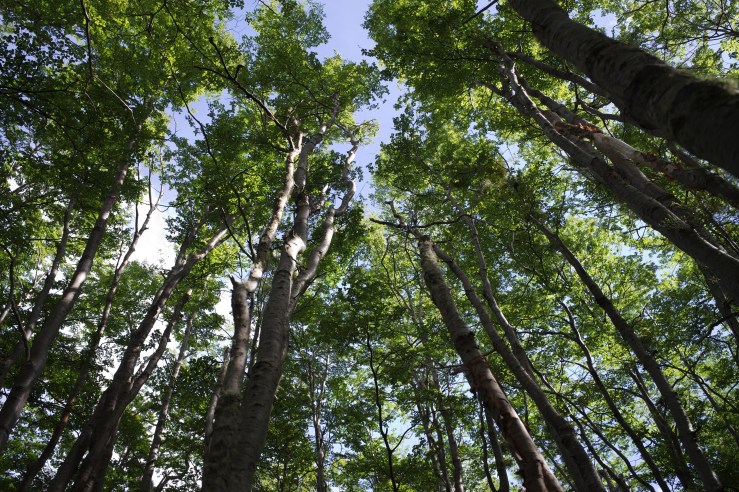
The majestic trees in the national park.
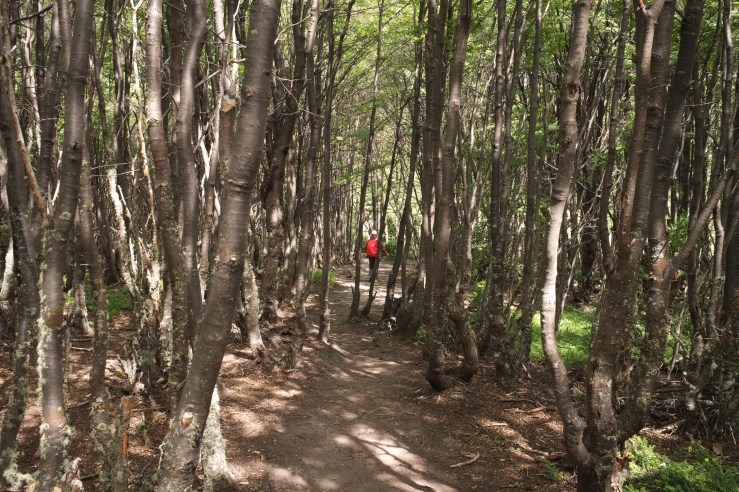
Christine hiking through the forest
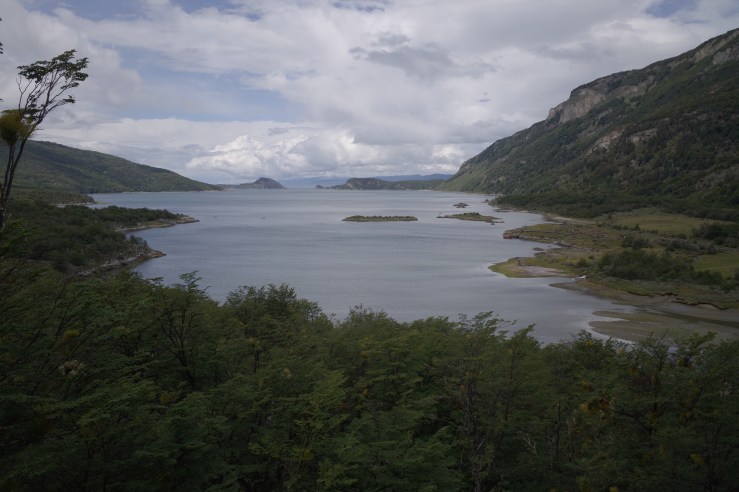
The fjord leads to the sea

A canoe on the river that leads to the fjord
Only a small part of the national park is accessible and we walked several hikes through the changing environment. There were many birds in the park including parrots (here at the end of the world? Yes!) and black-necked swans. Also we were able to see the destruction that beaver dams cause. The flooding kills the trees and a once flooded area needs a long time to recover. The beaver is a good example how introduced animals destroy the local environment and spread quickly as they don’t have much enemies here. We left the park and went to our bed and breakfast where we cooked spaghetti bolognese.

These trees died because the area was flooded by beaver dams.
On our second day we went to the Laguna Esmeralda, an easy hike over mostly muddy paths but with a great panorama at the end. Fortunately the weather treated us well again and it stopped raining right before we started our hike. This also meant that we were covered in mud after the day and that we spontanously decided to wash our clothes again. Luckily we had a washing machine in our lodge, which saved us a lot of money.
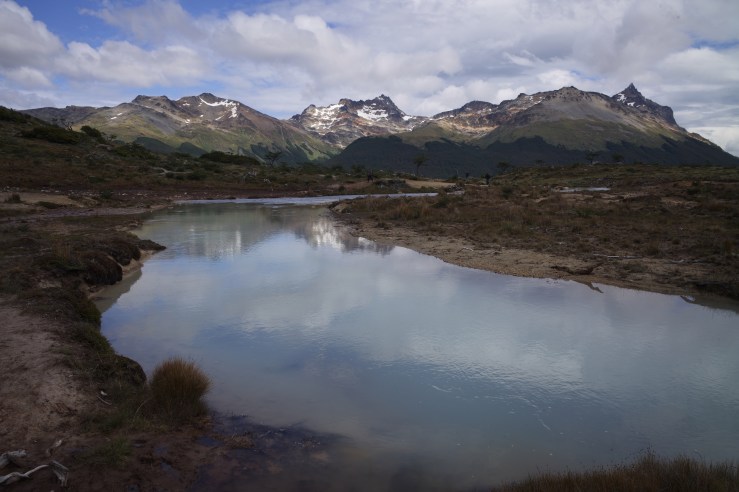

A giant beaver dam on the way to Laguna Esmeralda

The Laguna Esmeralda, named after its colour
We left Tierra del Fuego the next day for El Chaltén, the famous town in Argentinian Patagonia. On our way back over the Magellan strait at the closest point we saw dolphins and penguins, even though the drive only took 15 minutes. We were thrilled!!!
Generally we liked Tierra del Fuego and Ushuaia, but we would only recommend it to people who bring enough time to explore Patagonia. For those with less than three weeks we suggest to concentrate on Torres del Paine in Chile and El Chaltén and El Calafate in Argentina.

 Erst einmal weg...