

Lonely Planet describes La Paz as „a mad carnival of jostling pedestrians, honking, diesel-spewing minivans, street marches and dances, and cavalcades of street vendors“ and are completely right. The traffic in the city is imense and if cars should not emit more than 120 g CO2/100km in Europe, it seems to be 120 kg/100km here in Bolivia. If a truck or bus accelerates next to you you find yourself in a thick black cloud.
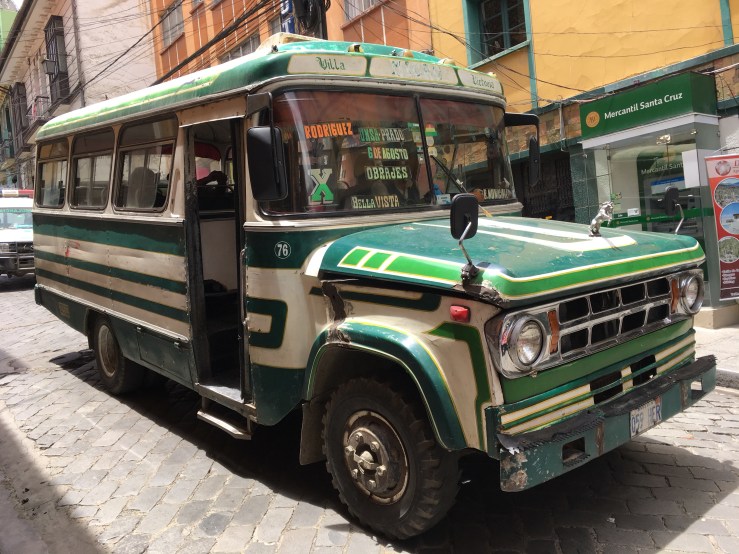
The nice old busses in La Paz

A power pole in La Paz
On our first day we did a walking tour through the city. The guide started with telling us about the famous prison in the city, where the prisoners live with their wives and children and where Coca Cola has the exclusive right to sell soft drinks. We then walked over the many markets La Paz is famous for. One of the most interesting one was the Witches Market, where „witches“ sell things like llama fetus for under your house or powder that you can use to blow at the person that shall fall in love with you. We learned that people in La Paz are very superstitious. There are even some stories that homeless people were taken up, given food and a lot of alcohol and then buried alive to serve as the foundation of a building. This should bring luck, according to the story. This is definitely not the place to pass out after drinking too much, we were told.

A display of goods at the Witches Market
La Paz has not so many sights, but is situated nicely in a valley. Therefore, we went on some viewpoints on our second day to marvel at the amazing views. We used the cable cars that the locals use to avoid traffic and to move between neighborhoods. On our second day we started to like La Paz as the view from above is impressive. I also started to like the chaotic market stands right on the streets and the little turmoils everywhere.

The Teleférico in La Paz
The next day we left for Sucre, the birthplace of the nation and Bolivia’s capital city, although the government and the parliament sit in La Paz. We decided to take the 1h flight against the 16h bus as prices for a domestic flight were quite reasonable. Once we arrived in Sucre we immediately started to love the city. It is very scenic and has much less traffic and people on the streets. We liked it similarly to Arequipa in Perú – and like Arequipa, Sucre is called the „White City“ because of its white houses.

The white buildings in Sucre
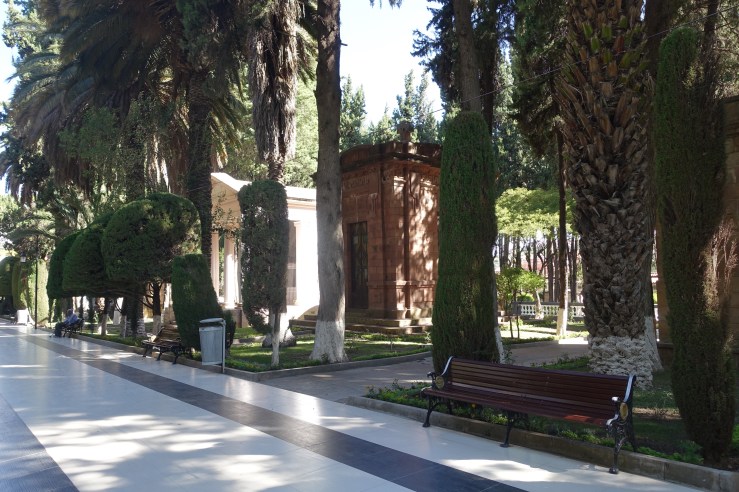
This is the scenic cementiary of Sucre. Wealthy colonial families built large mausoleums for themselves.

The building of the local government
The most famous building of Sucre is the Casa de la Libertad, where the Bolivian declaration of independence was signed on August 6, 1825. We joined a Spanish speaking tour among locals and only understood some bits. Nonetheless, we were able to understand the significance of the building and caught a glimpse on the declaration itself.
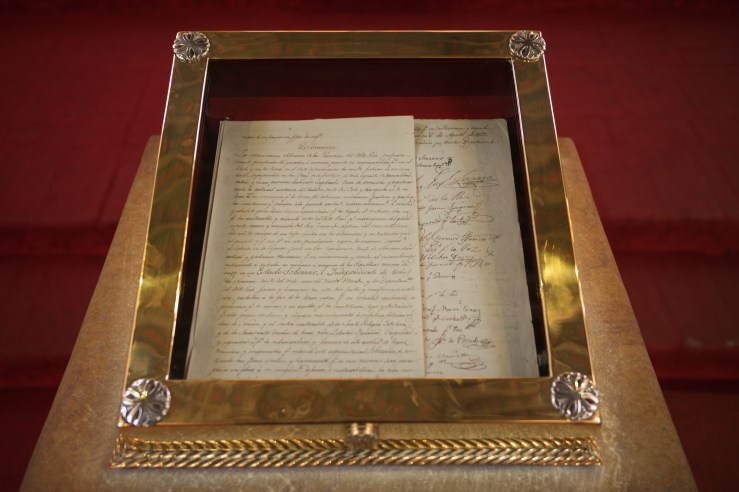
The Bolivian declaration of independence
Another interesting thing 5km outside of Sucre is the Parque Cretàcico. To go there we used a local bus, which was interesting as we were the only gringos and because we got a better understanding of the city. The Parque Cretàcico is in a cement quarry where the employees surprisingly found over 5000 footprints of at least four different species of dinosaurs. It is the largest collection of dinosaur footprints in the world. The view was amazing, however we were quite far from the wall. Anyways, we enjoyed a great English private tour and learned a lot about dinosaurs and the footprints.
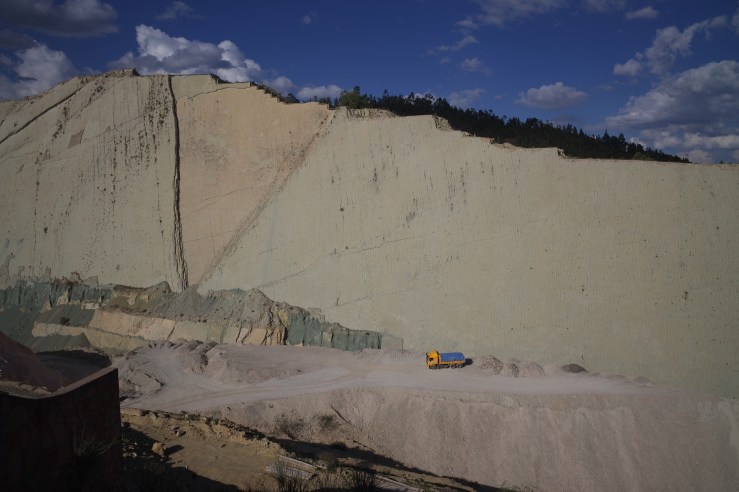
This is the wall with the dinosaur footprints – can you see them?
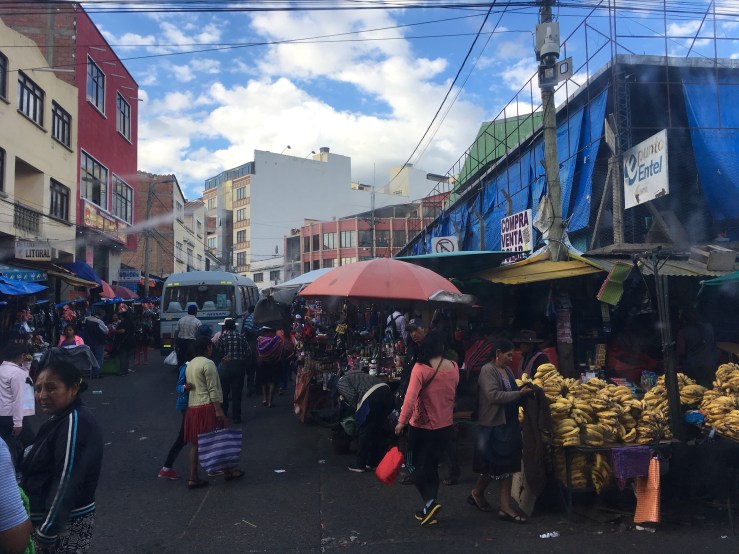
Street market in Sucre
After two days of sickness, which I spent in the bed of our hostel, we treated ourselves with a visit to the cinema and went to see Star Wars Episode 8. We had high expectations but we were not very fond of the movie. Disney is trying too hard and in my view has no idea how the Star Wars universe works. Anyways, it was a lovely evening and the popcorn tasted great after two days of carrot soup.

The minitiature Eiffel tower in Sucre. And yes, it was built by Gustave Eiffel.
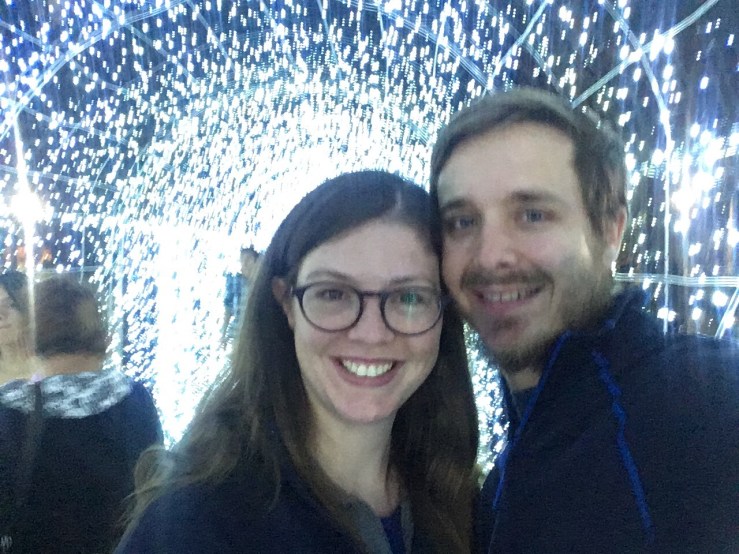
Us inside a christmas installation
To cut the long way to Uyuni we spend a night in Potosi. Potosi was founded in 1545 after silver was found in the nearby mountain Cerro Ricco. During the boom years Potosi became the largest and richest city of the Americas. The silver was essential to finance the Spanish monarchy. Slaves were forced to work in the mines and according to Lonely Planet, 8 million slaves died in the mines because of the brutal conditions. The mines are still exploited today and tourists can book tours to see the miners at their work.
We decided against the mine tour but wanted to explore the city in more detail. There are still some signs of its glorious past, but Potosi today is mostly a not-so-nice spread out city with a small old city center. We visited the central market (not so impressive), some churches and the most important building in town – the National Mint Museum. We got an English tour and they told us how the silver was melted, made thinner and how the coins were stamped out. The factory produced coins until the mid 20th century. Today, Bolivia does not make its own money but imports its money from foreign countries to make their bills and coins.

The Santa Teresa Convent in Potosi

The historic city of Potosi with the mountain Cerro Rico in the back

Potosi street scene
One interesting thing we were able to observe closely were demonstrations. Bolivia is famous for its demonstrations. According to one of our guides they even protested to bring back the TV series „The Simpsons“ – and they got it back and not just for one but three times daily. In Potosi there were several demonstrations at the same time. They usually block the streets, whistle and fire up fireworks – quite a difference to European demos.
On our second day we left Potosi on a bus and drove about four hours to the desert city of Uyuni. Uyuni does not have much to offer, but it is the starting point for the tours through the salt desert „Salar de Uyuni“. More to come on this blog about this tour.

Our bus from Potosi to Uyuni

 Erst einmal weg...