

We arrived at 4.30 am in Arequipa after a 15-hour bus ride with little sleep. We therefore went directly to our room to relax.
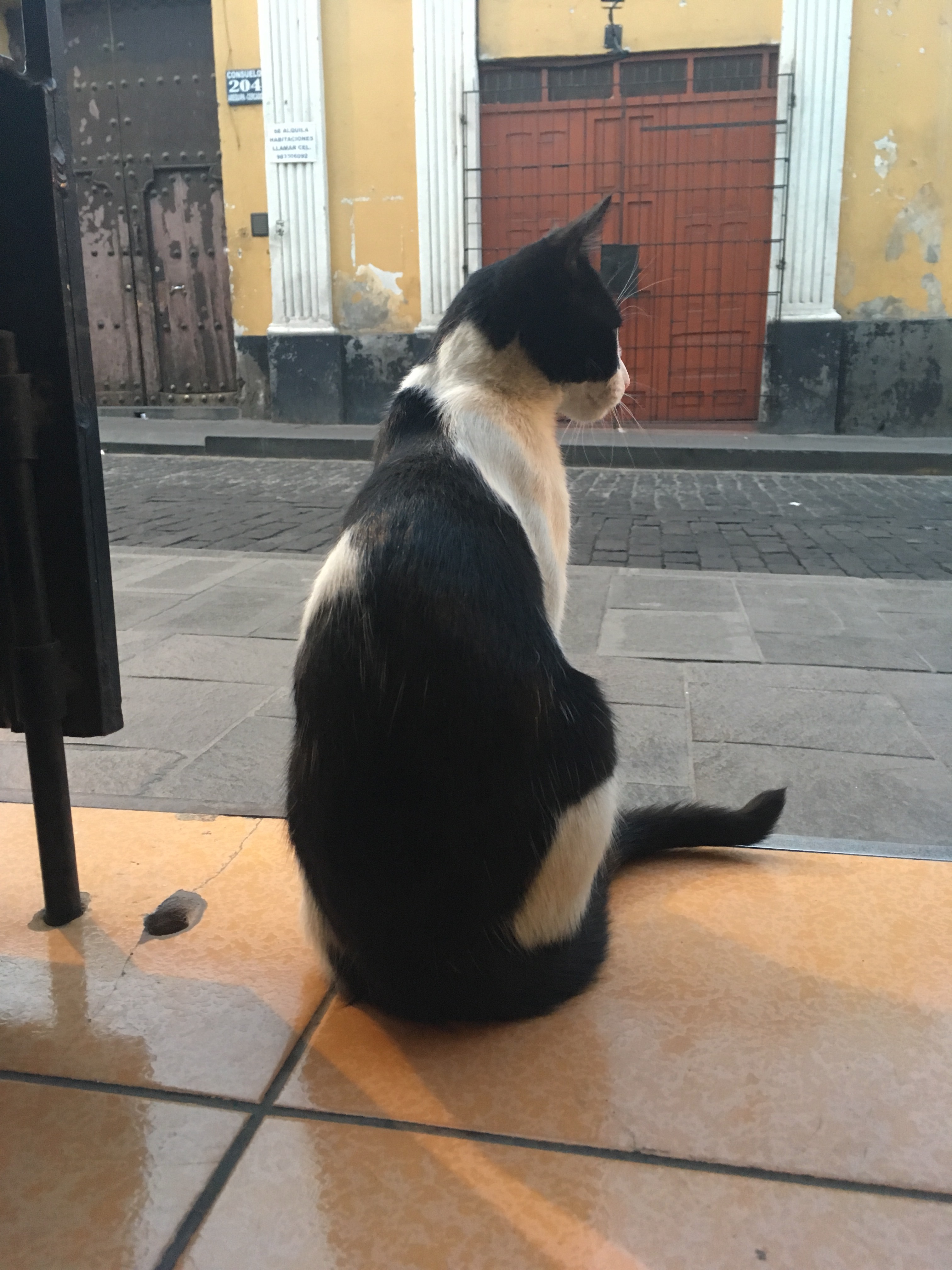
This little cat greeted us at our hostel
After some rest we headed out to explore the second largest city of Peru (about 1.5 million inhabitants). Arequipa is called the white city because many buildings are made out of of the white volcanic rock „sillar“ and also because the white skinned Spanish founded it and lived there in the 15th century.
Christine and I quickly started to love the city and felt comfortable very quickly. The streets are quite narrow compared to Lima and often go just one way. An interesting fact I noted is that there are almost no motorcycles, very few buses but a lot of little taxis. This seems to be the way people move around the city.

Old VW Käfer everywhere – great for photos
To get to know the city we did a free walking tour. However, we did not learn much about the city but more about animals and the culture of highland Peruvians and were taken from shop to shop :-(. We learned that there are Alpacas, Llamas and Vecunias, which look a little similar but are easily to distinguish from each other. The wool of the Vecunia, which is also the national animal of Perú, is said to be one of the finest on this planet and a pullover costs around 4,000 USD. After visiting a pre-Inca kitchen (we learned that there are over 3,500 kinds of potatoes) and pisco tasting (the recipe is easy: 3-1-1-1 – 3 cups of Pisco, 1 cup of sugar siroop, 1 cup of lemon juice and 1 egg white) the tour was over.
In the evening we treated us well and went to a nice restaurant, after we dined at a gas station the night before. We went to Zig Zag, which is located in a two-story colonial house and has an iron stairway designed by Gustave Eiffel!!! This was reason enough for me to go. It turned out their food was delicious. We tried Peruvian soups for starters and Alpaca on hot stone for mains. This Alpaca fillet is one of the best meat dishes I‘ve ever had.


After this fantastic meal we went to the main square and looked for a bar with a TV. It was late Wednesday and the Perúvian football team was playing the return game against New Zealand to qualify for the World Cup in Russia. The first game in Auckland ended 0-0, so we knew that Perú had to win. All day the atmosphere was ecstatic: almost every second person walked around in the national jersey and in the afternoon about 100 policemen and soldiers walked around the main square in jerseys, singing.

We squeezed into a restaurant among locals and were greeted warmly after we told them that we support Perú, which was somehow obvious with my headband. Nevertheless, they were critically investigating. The game fulfilled all expectations for a great match and the Peruvians won 2-0. We were jumping around with the locals, singing the songs and hugging each other. After the game the main square got crowded with people who ran around, singing and celebrating. It felt as they have already won the World Cup and we were amazed and touched by all this enthusiasm. It’s worth to mention here that Perú has not been at World Cup since 1982, so it was a big night for the team and the country. We are looking forward to seeing this great team and its supporters next summer in Russia.


This was our first fantastic day in Arequipa. What a great start.
On the following days we explored the city in more detail. One of the most interesting things to see in Arequipa is the Monasterio de Santa Catalina. This convent occupies one block and is like a city in the city. It was founded in 1580 and until the 18th century the Domenican nuns lived in different houses and had several servants that took care of the cleaning, washing and cooking. It was like a “luxury monastery” where rich (mostly Spanish) families sent their daughters. In the old times it was traditional that the oldest child will be married and the second one went to church to either become a nun or a priest.

One of the many courtyards at the Monasterio
Another place we really liked was the main square called Plaza de Armas. There is always life there with the children playing and older people relaxing on the benches. It is surrounded by colonial buildings on three sides and the Catedral, which takes one full side and is one of fewer than 100 basilicas in the world entitled to display the Vatican flag.
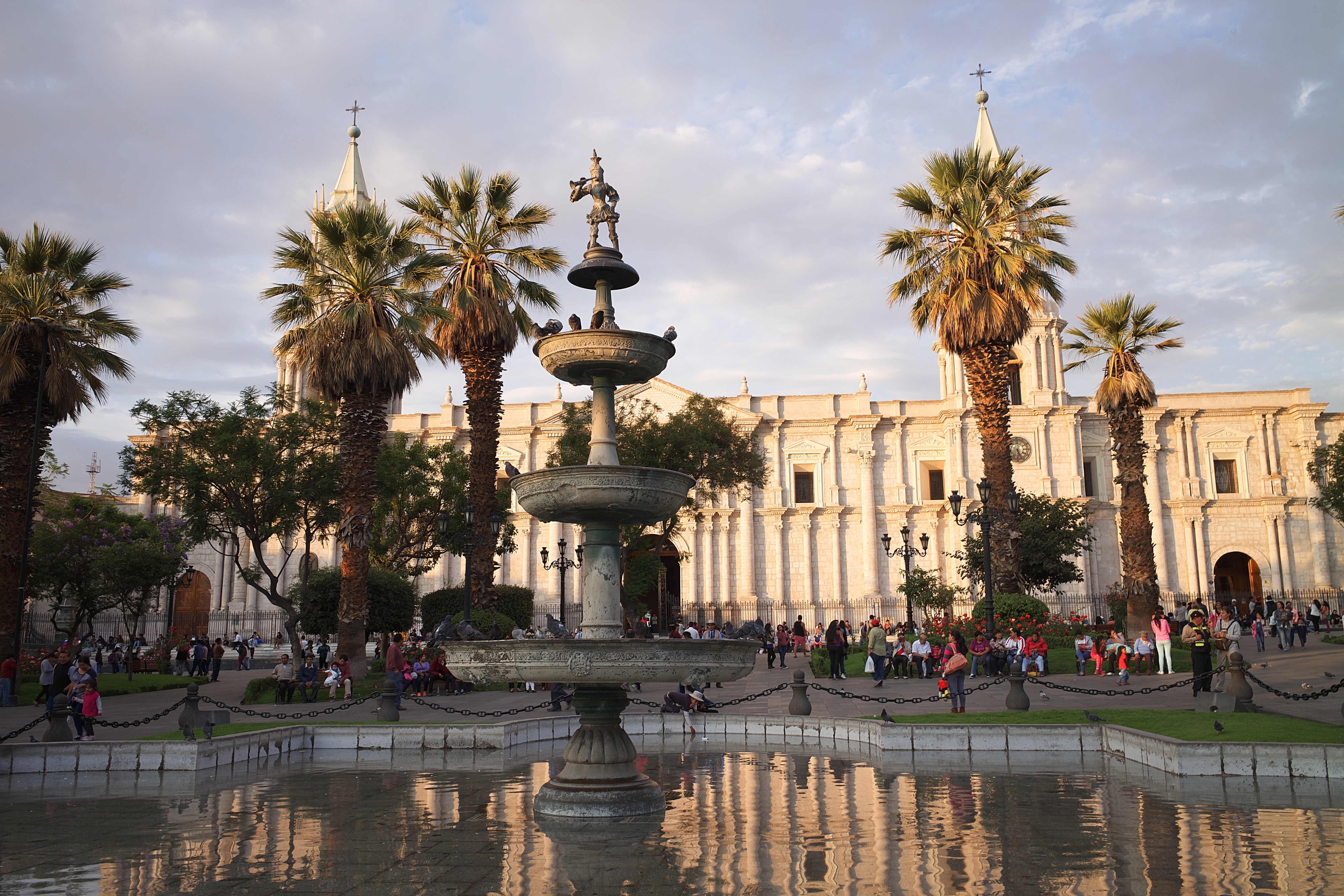
The Plaza de Armas with the Catedral in the back

 Erst einmal weg...